Data Agents for your Business.
The agentic data platform that automates data quality, governance, and observability — end to end. Command your data lake with the precision of a technical blueprint: data agents do the heavy lifting, your team stays in the loop.
The architecture
Multi-layered metadata orchestration designed for infinite scale. DuckLake bridges the gap between raw storage and intelligence — an Iceberg catalog and ACID SQL over your own Parquet.
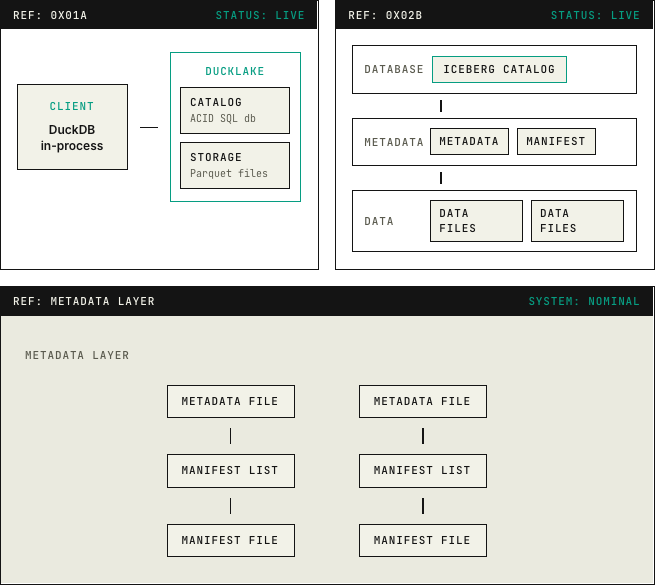
Built on DuckDB + DuckLake
DuckLake is a lakehouse architecture that is, in essence, just a database and some Parquet files. DuckDB runs in-process right next to your data; the DuckLake catalog is served by an ACID-compliant SQL database; and the data itself lives as open Parquet files on local disk or object storage.
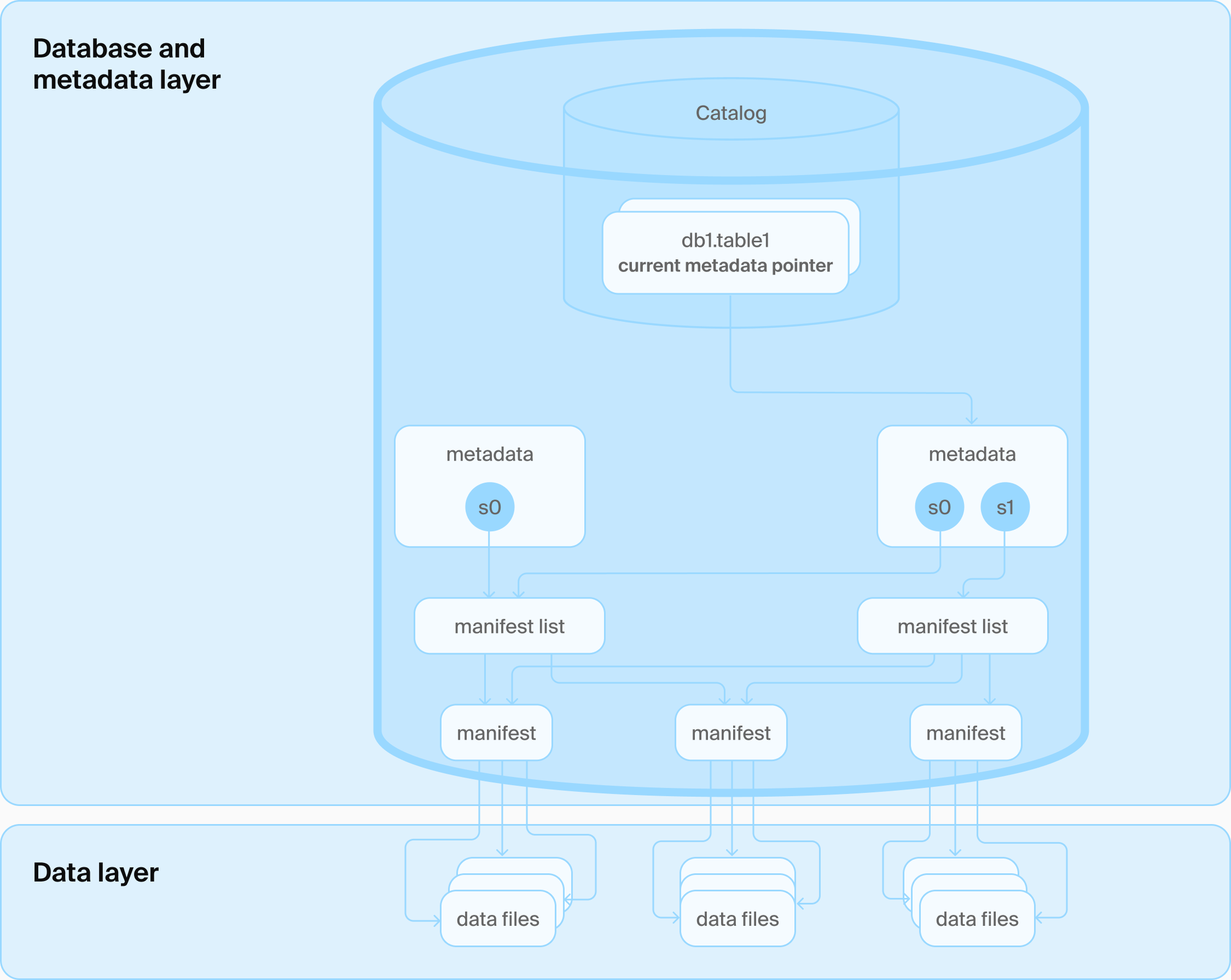
DuckLake's move: the entire metadata layer — pointers, snapshots, manifest lists, manifests — lives inside one ACID-compliant SQL database. Only the Parquet data files sit in storage, so every metadata change is a single transaction.
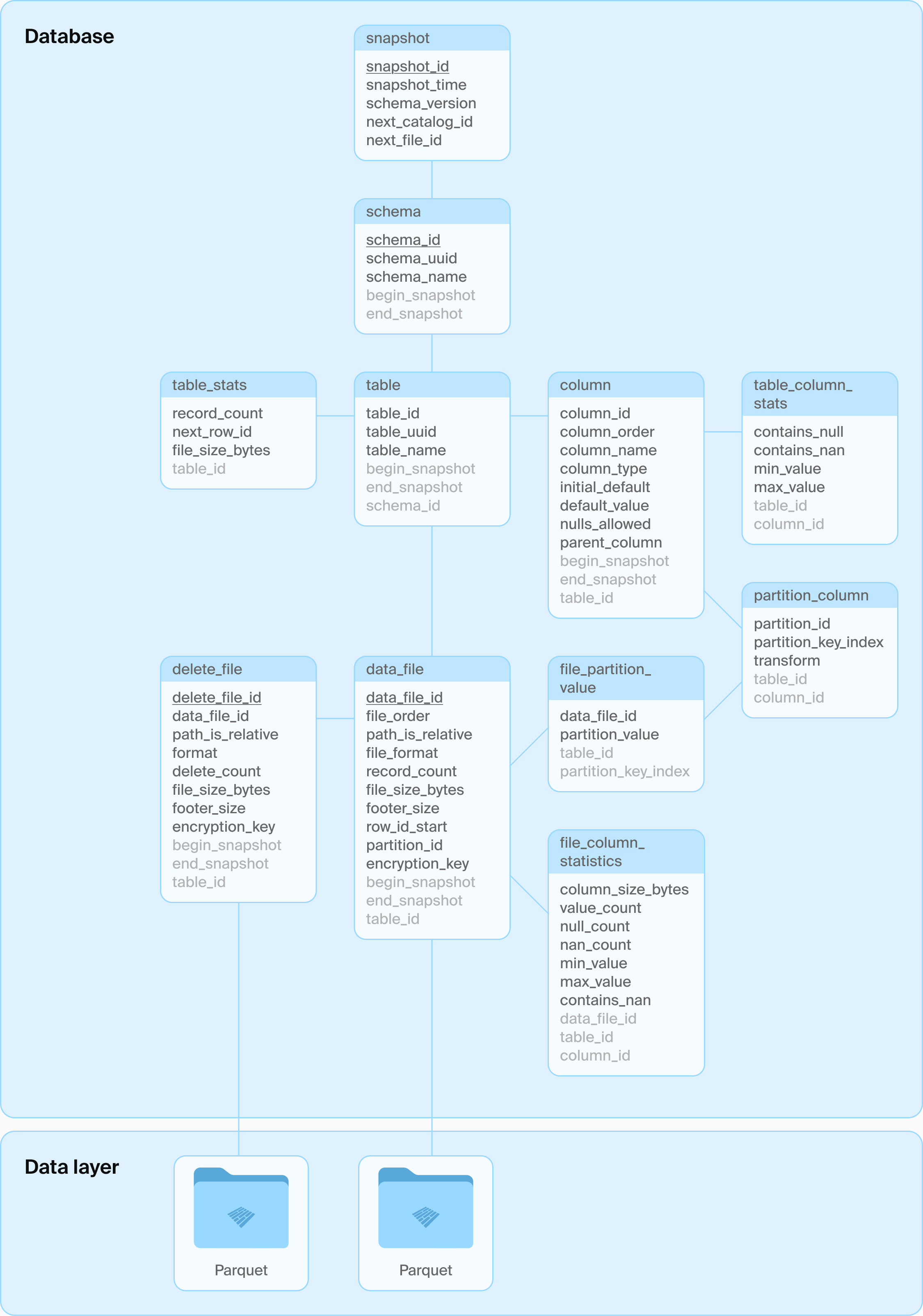
The whole catalog is ordinary SQL tables — snapshots, schemas, tables, columns, data files, delete files, and statistics. Every change is a transaction; the data layer stays open Parquet.
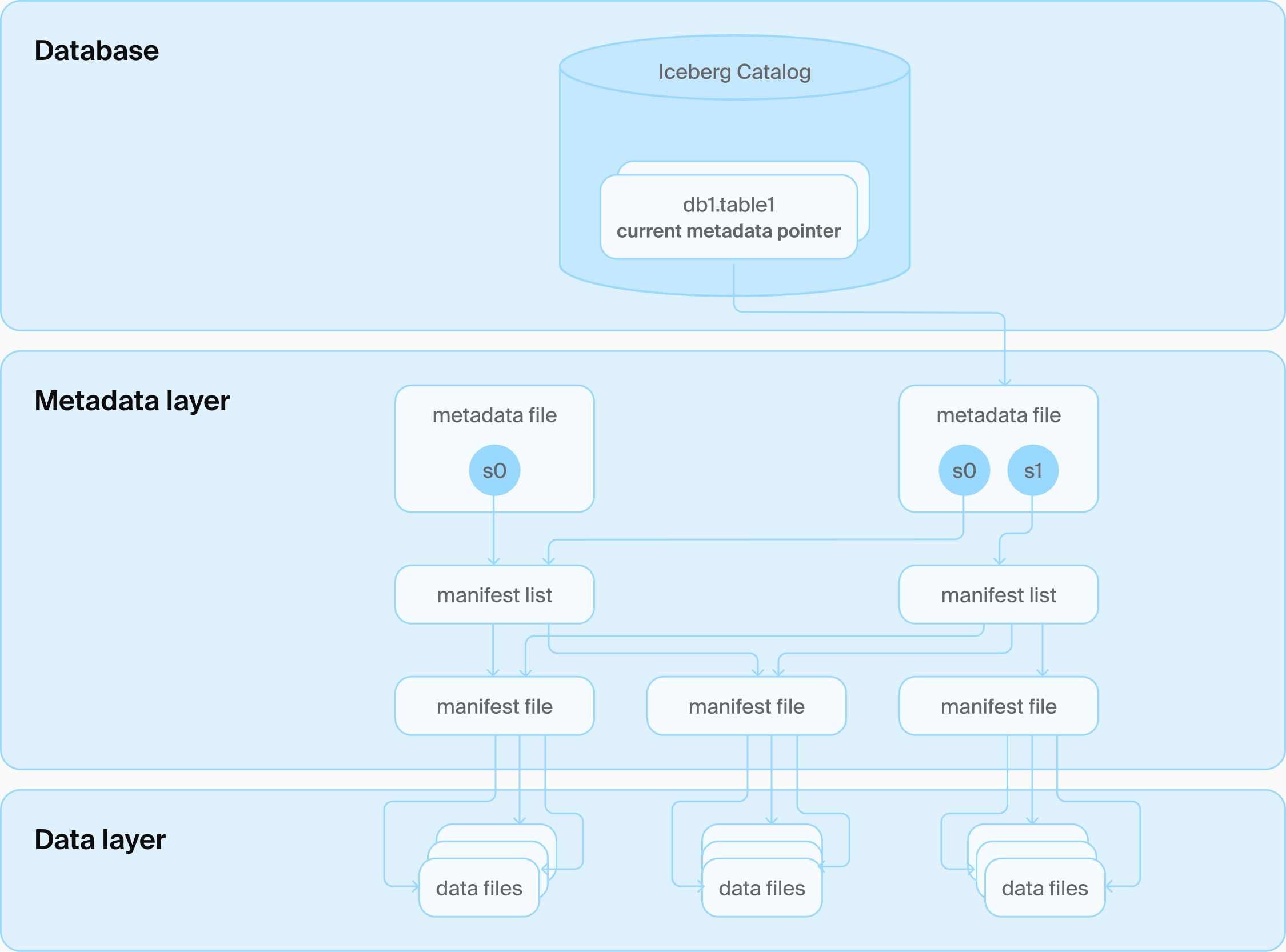
The catalog keeps one current metadata pointer per table. A query resolves pointer → metadata file → manifest list → manifest → data files, so every read sees one consistent view.
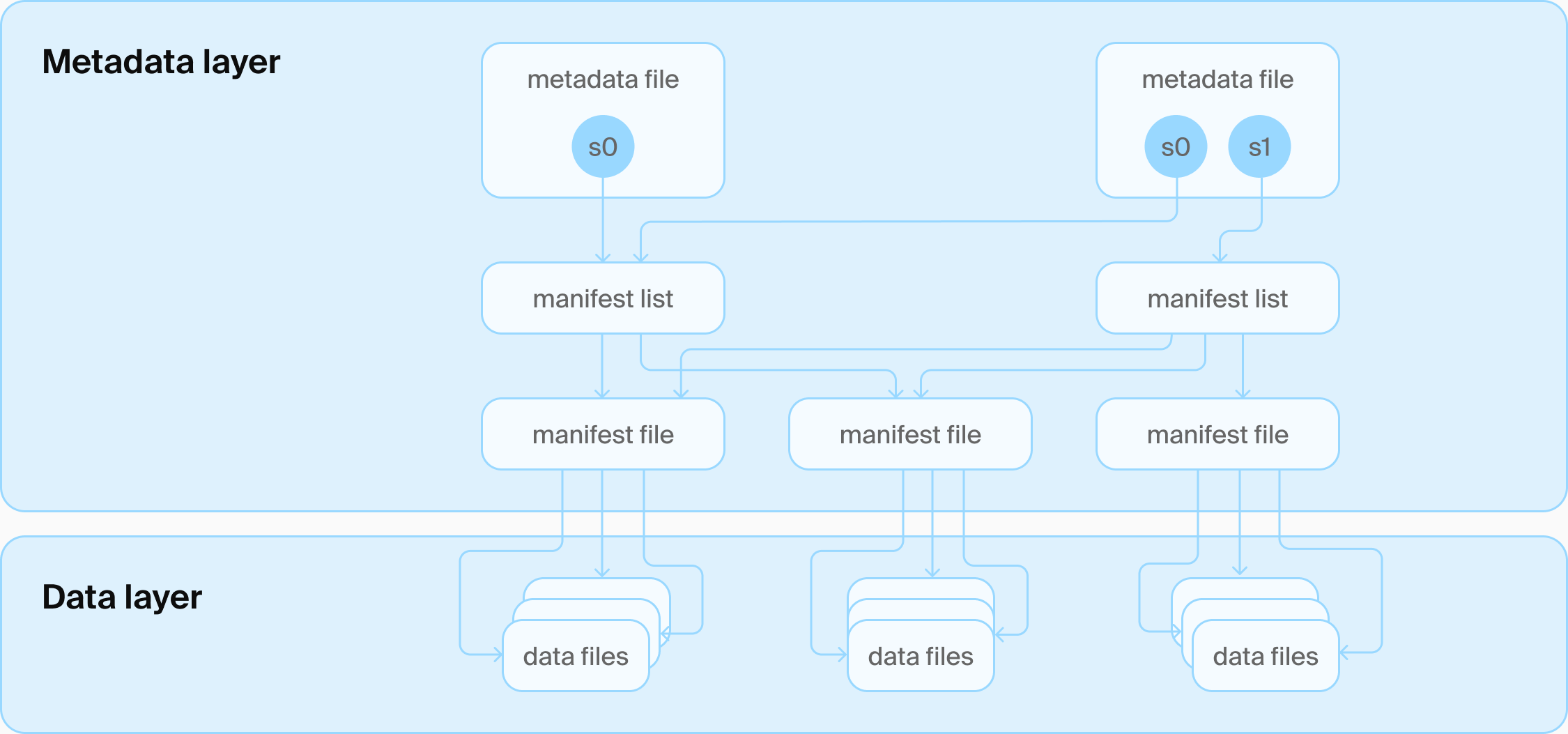
Snapshots (s0, s1, …) are immutable. Each commit writes a new metadata file that shares unchanged manifests with its predecessors — point-in-time travel is just reading an older snapshot.
Command & query
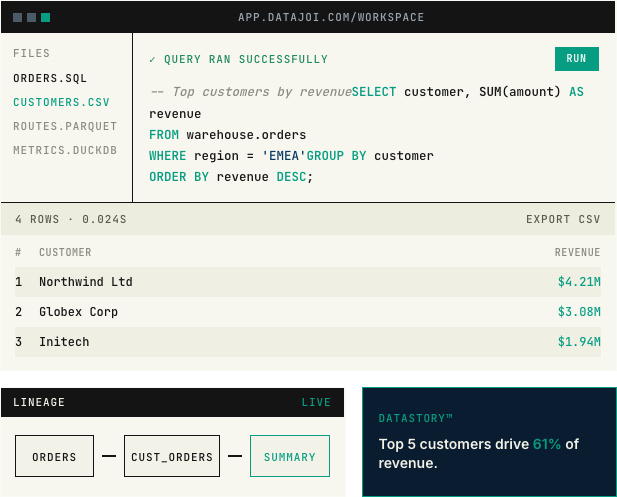
Data agents run the command loop end to end — they write, execute, and validate SQL against your lake, and manage the catalog itself. On DuckLake + DuckDB that means agents register sources, evolve schemas, compact snapshots, and keep statistics fresh: every change an ACID transaction in the catalog, every result a DataStory™ your whole team can read.
Automated at every step.
An agentic pipeline with human-verified, quality-controlled lineage — end to end.
Connect your data
Lake schema and lineage read automatically.
Agents write SQL
Plain English becomes a query you can check.
Run & validate
Executes with automated data-quality checks.
Quality review
Agents flag anomalies; a human confirms edge cases.
DataStory™ delivered
A verified narrative, ready to share.
A plan for every data platform
Run your own, run your whole company's, or right-size something custom — datajoi's agents do the heavy lifting.
Pro
$99/mo
For the hands-on data pro
- Manage your own data platform
- Or manage platforms for your clients
- Agents, DataStory™ & verification checks
SMB
$999/mo · up to 10 users
Fits most businesses out of the box
- Everything in Pro
- 500+ existing connectors
- Shared workspace for up to 10 users
Enterprise
Contact us
We'll right-size a plan to your stack
- Custom connectors
- Data migrations & data modeling
- Anything custom, built with you
Looking for the Chrome extension? Free trial, then paid →
Frequently asked questions
What is datajoi?
datajoi is an agentic data platform that automates data quality, governance, and observability end to end. Purpose-built data agents connect sources, write SQL and data models, run quality tests, and document everything — while your team reviews and approves every change before it reaches production.
How do datajoi's data agents work?
datajoi ships purpose-built agents for ingestion, modeling, quality, and cataloging. They work your data stack through MCP, API, and SDK integrations: an agent proposes a change — a new transformation, a schema edit, a quality rule — as a clear, reviewable request in plain language. A human approves, edits, or sends it back. Nothing touches production without a human yes.
What is the DuckLake architecture datajoi is built on?
DuckLake is a lakehouse architecture that is, in essence, just a database and some Parquet files. datajoi runs DuckDB in-process against a DuckLake catalog: an Iceberg-compatible metadata layer — metadata files, manifest lists, and manifest files — points at columnar Parquet data files in your own storage. You get ACID SQL, snapshots, and time travel without a proprietary warehouse or vendor lock-in.
Does datajoi replace my data team?
No. datajoi is built human-in-the-loop by design. Agents handle the repetitive heavy lifting — writing tests, mapping lineage, monitoring pipelines — and your team stays in control with plain-language reviews, one-click approvals, and a full audit trail of who approved what and when. No SQL is required to review changes.
Which data sources does datajoi connect to?
datajoi offers 500+ connectors powered by dlt, with DuckDB and Apache Arrow for compute. It works with warehouses and tools like Snowflake, BigQuery, Databricks, Postgres, dbt, Kafka, and S3 — plus SaaS apps, files, and streams. Data lands from any source in minutes.
What is a DataStory?
A DataStory is datajoi's answer format: ask a question in plain language and get back the generated SQL, the results, and a narrative explanation with live charts — backed by lineage, quality tests, and observability. DataStories refresh on their own, so there is no dashboard to build or maintain.
Put your data on autopilot.
Join the waitlist and be first to command an agentic, end-to-end data platform — built on DuckLake, with humans in the loop.
You're on the list.
Thanks for your interest in datajoi. We'll be in touch soon with your early-access invite.
Already have access? Launch the platform →